Addwisory Advisory Marketplace Case Study
A Two-Sided Consulting Marketplace Designed Around Trust, Advisor Discovery, Project Intake And Proposal Flow.
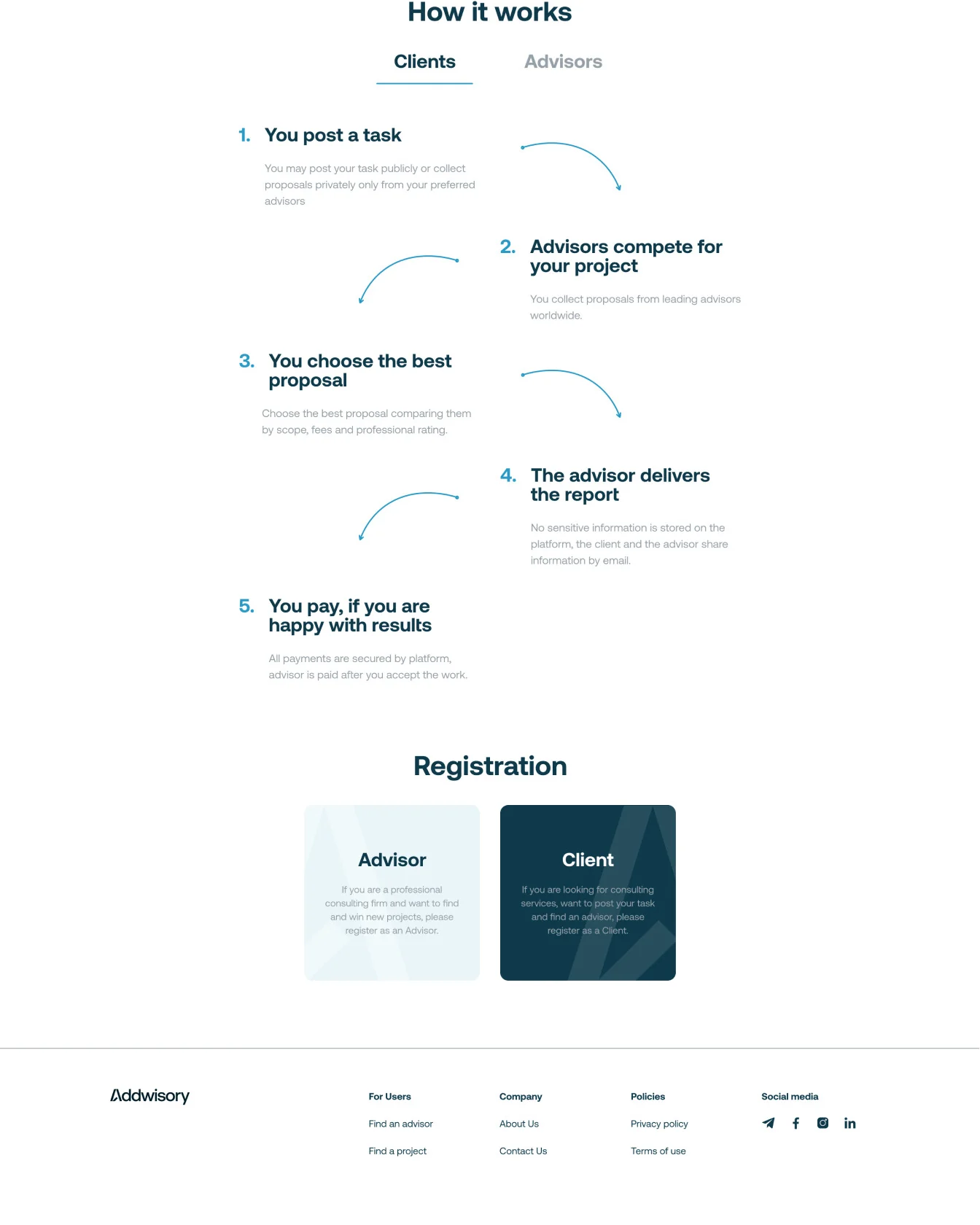
Addwisory was shaped as a professional-services marketplace where trust had to appear before the first message. A simple directory would not be enough: clients needed to understand advisor reliability, project posting, proposal comparison, market pricing and secure communication.
Addwisory
Advisory marketplace
Main Challenge
Clients needed a safer way to find qualified advisors, and advisors needed a credible profile and proposal workflow.
Timeline
The source material supports phased planning around advisor roles, proposal logic, payments, moderation and compliance; it does not document a fixed public delivery date.
Team
Product strategy and UX/UI are evidenced in the source; engineering, QA and launch roles depend on the confirmed two-sided advisory marketplace implementation scope.
Core Scope
A two-sided consulting marketplace designed around trust, advisor discovery, project intake and proposal flow
Product Overview
Why Addwisory needed a clearer two-sided advisory marketplace and how the experience was organized around the moment users need to post a project and compare credible proposals.
JP Urban Digital shaped Addwisory as a professional-services marketplace where trust had to appear before the first message. A simple directory would not be enough: clients needed to understand advisor reliability, project posting, proposal comparison, market pricing and secure communication.
The product combined public marketplace storytelling with private account logic, advisor profiles, project intake, proposal review and role-specific dashboards. The strongest part of the work was turning a complex advisory transaction into a calm sequence that feels easy for both sides.
A useful comparison is Cryfluenz, where marketplace roles, profile trust and controlled account workflows shaped a different product context.
Real Product Problems And Decisions
Five case-specific tensions behind Addwisory, from marketplace trust before contact to future marketplace operations.
Marketplace Trust Before Contact
What It Meant
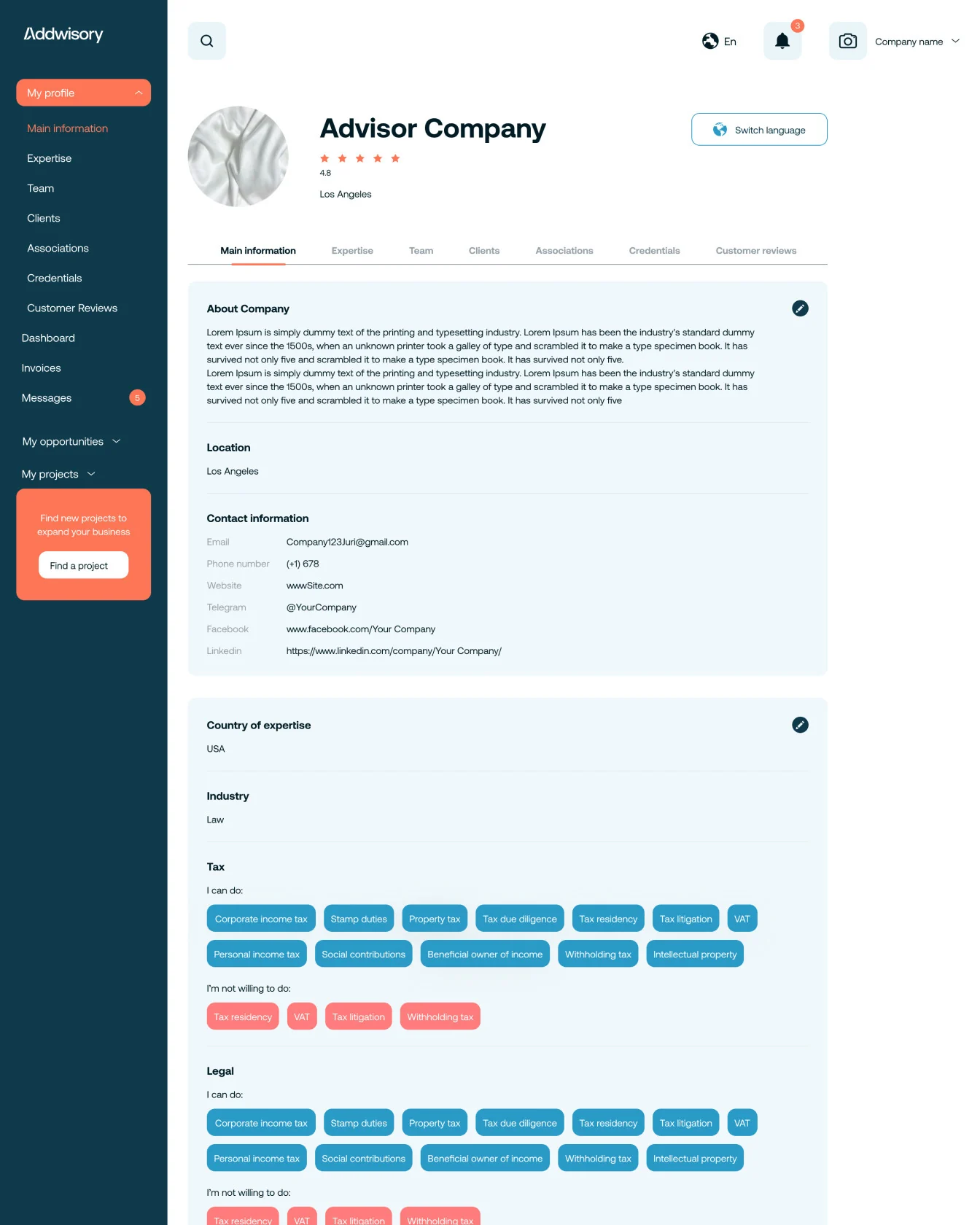
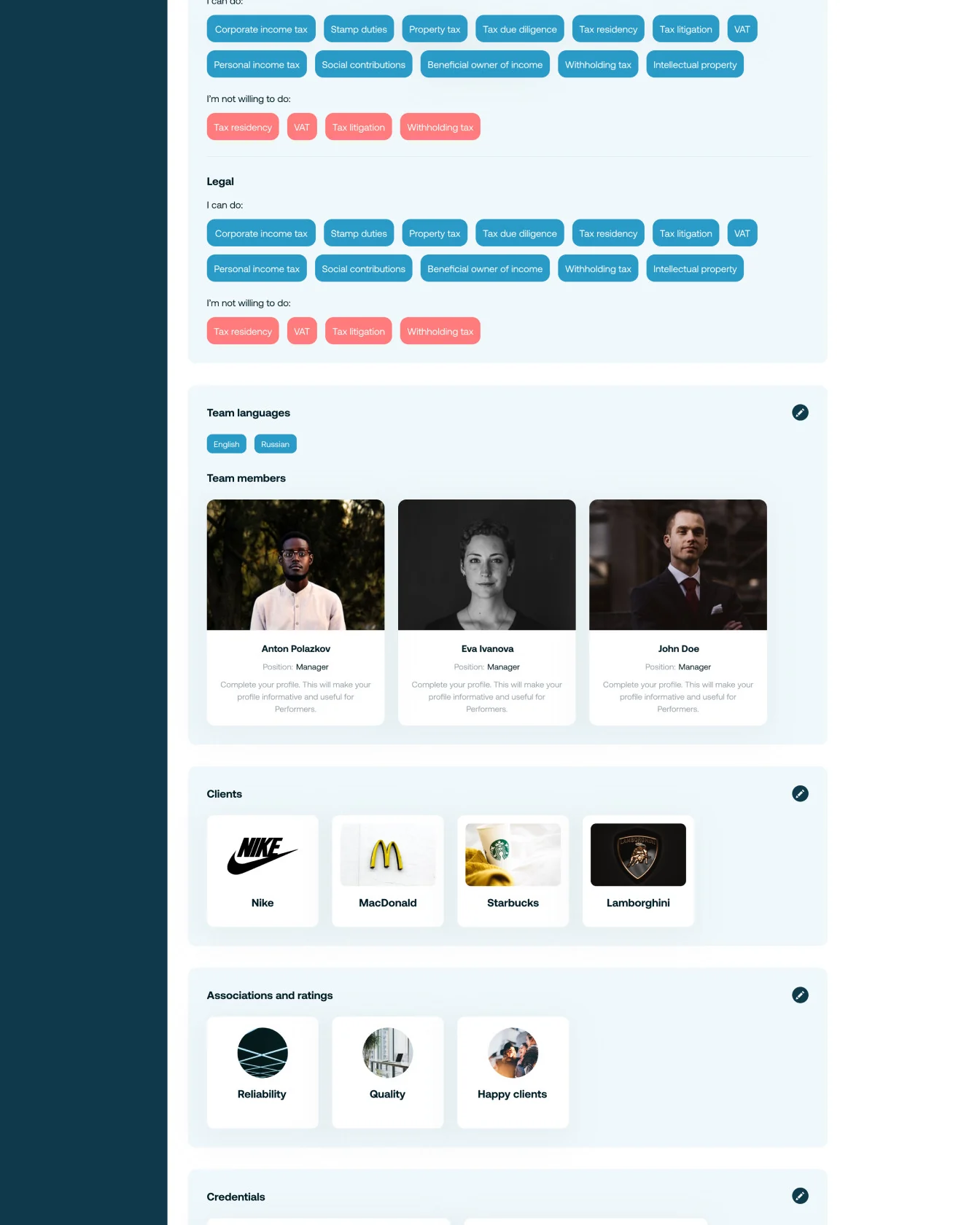
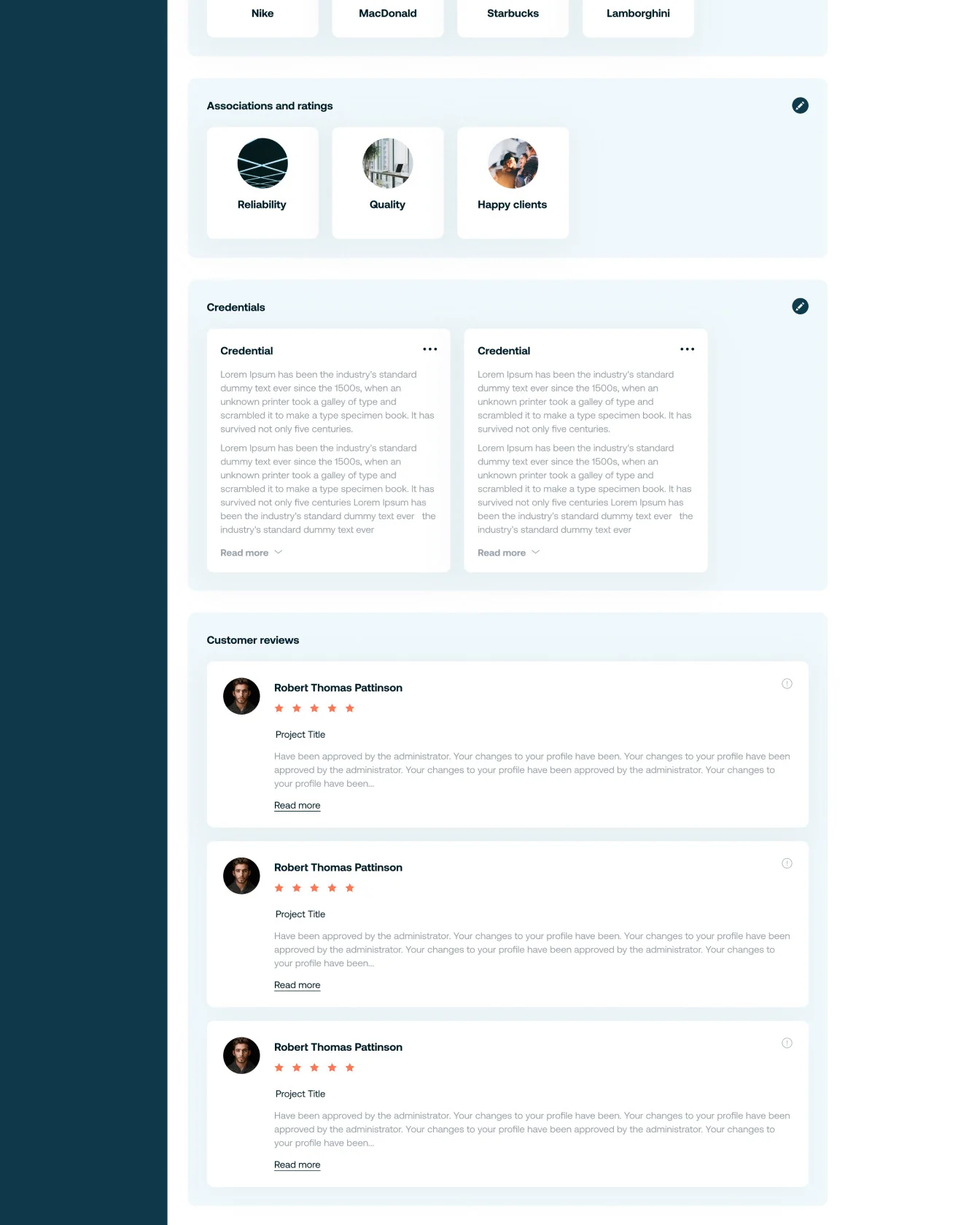
Advisor profiles, credentials, reviews and company details had to explain why a client should start a conversation.
How We Solved It
We made profile depth, expertise tags, client proof and contact context visible before the proposal stage.
Two Different User Journeys
What It Meant
Clients and advisors needed different onboarding, navigation and success paths.
How We Solved It
We separated client project posting from advisor profile management while keeping one shared product logic.
Proposal Comparison
What It Meant
Clients had to compare offers without turning the experience into a noisy bidding board.
How We Solved It
We structured proposal flow around scope, expertise, response quality and decision clarity.
Security And Sensitive Advisory Work
What It Meant
Legal, tax and consulting projects often include confidential context.
How We Solved It
We treated trust, access and controlled communication as part of the product, not a footnote.
Future Marketplace Operations
What It Meant
The platform needed to support moderation, account states, invoices and support after launch.
How We Solved It
We planned admin and operational logic early so the marketplace could be managed, not just displayed.
Strategy
The product strategy behind Addwisory and the decisions that made it easier to post a project and compare credible proposals. The strategy was to position Addwisory as a controlled advisory marketplace, not a freelance listing site. We organized the experience around the moment when a client needs confidence: who can help, why they are credible, what happens after a task is posted and how proposals are compared. The design had to reduce anxiety around expertise, price and confidentiality while giving the business enough operational control to moderate users, support transactions and expand advisor categories later. This keeps the case commercially useful because the final product supports real decisions, not just a prettier interface.
What The Build Included
Five documented workstreams that define the product and experience scope of Addwisory.
Marketplace Architecture
Client, advisor and admin roles were mapped into separate but connected workflows.
Advisor Profile System
Profiles were structured around expertise, credentials, client proof, location, language and service areas.
Project Intake And Proposal Flow
The client path moved from task creation to proposal review without unnecessary friction.
Account And Dashboard UX
Private areas supported profile editing, project tracking, invoices, messages and opportunities.
Trust And Conversion Copy
Public sections explained value, security and fair pricing in language clients could understand quickly.
Key Product Screens And User Flows

Problem, Fix And Business Outcome
How five documented product problems became concrete interface decisions and practical outcomes for Addwisory.
Marketplace Trust Before Contact
Fix
Placed advisor proof, expertise context and profile completeness before project posting.
Business Outcome
Clients can evaluate marketplace credibility before sharing a sensitive business need.
Two Different User Journeys
Fix
Separated client intake and proposal review from advisor profile and opportunity management.
Business Outcome
Each role receives a focused workflow without losing the shared project context.
Proposal Comparison
Fix
Standardized proposal information around scope, approach, expertise and response quality.
Business Outcome
Clients can compare submissions on meaningful criteria instead of price alone.
Security And Sensitive Advisory Work
Fix
Defined controlled messaging, access and account states around confidential work.
Business Outcome
The platform can reduce avoidable exposure while keeping collaboration understandable.
Future Marketplace Operations
Fix
Included moderation, user records and opportunity oversight in the product architecture.
Business Outcome
The business can manage marketplace activity as categories and participation grow.
Business Impact
The operational and commercial value Addwisory was designed to support through clearer post a project and compare credible proposals.
01
Better Trust At The First Visit
The marketplace explains why clients can rely on the advisor pool before they create a task.
02
Clearer Advisor Participation
Advisors understand what to complete in their profiles and how they can receive opportunities.
03
Less Manual Explanation
The product itself explains posting, proposals, pricing expectations and delivery flow.
04
Stronger Operations
Admin logic gives the business a way to manage users, records, opportunities and support.
05
Expandable Category Model
The same structure can support new advisory niches without rebuilding the platform.
Connected Services
Five JP Urban Digital service layers directly relevant to the documented scope of Addwisory.
01
Supports client, advisor, proposal and project records without forcing Addwisory into a generic off-the-shelf workflow.
02
Extends advisor approval, project moderation and proposal tracking into permissioned admin views, approvals and reporting.
03
Connects client, advisor, proposal and project records with ownership, follow-up and status visibility after the first interaction.
04
Turns the public experience for clients comparing specialist advisors into a clearer path to post a project and compare credible proposals.
05
Measures task creation, advisor participation and proposal progression so the team can see where the experience needs improvement.
Budget And Scope Planning
Planning ranges for a comparable two-sided advisory marketplace; final scope depends on advisor roles, proposal logic, payments, moderation and compliance.
Marketplace Discovery And Role Design
$9,000-$28,000
Advisory Marketplace MVP
$45,000-$140,000+
Admin, CRM And Transaction Layer
$18,000-$65,000+
Marketplace Analytics And Content
$5,000-$18,000+
for category content, tracking, reporting and conversion review; use analytics and BI pricing to compare the nearest delivery model.
Scope Note
Payment processing, advisor verification, messaging depth and compliance can move the final scope well beyond a simple directory.
Where This Approach Also Applies
Three markets where the same marketplace roles, profile trust and controlled account workflows can solve a similar user or operational problem.
B2B And Professional Services
Expert-led firms use the same trust and qualified-intake pattern before a high-value conversation.
Legal And Law Firms
Confidential advisory work also depends on credentials, controlled intake and clear engagement boundaries.
SaaS And Technology
Marketplace software needs precise onboarding, role logic and account states as categories expand.
Tools And Stack
The design and delivery methods used to structure Addwisory, with implementation choices kept proportionate to the documented scope.
01
Product Planning
Mapped client, advisor and administrator decisions across the full marketplace cycle.
02
UX And Interface Design
Designed trust-led profiles, intake, proposals and private account patterns.
03
Experience Logic
Connected project posting, advisor discovery, comparison and communication states.
04
Operational Model
Defined moderation, access and record requirements for operating the marketplace.
05
Quality Review
Reviewed role permissions, confidential-data exposure, responsive flows and edge cases.
Planning An Advisory Marketplace Built Around Trust And Control?
Plan Your Marketplace Build
01
We review advisor discovery, client intake, proposal comparison and trust requirements.
02
We identify where credibility, confidentiality or unclear marketplace rules can block action.
03
We map client, advisor and admin workflows together with the operational controls behind them.
04
You receive a phased marketplace plan that supports confident decisions and manageable growth.