GTE Driver Logistics Mobile App Case Study
A Logistics Mobile App For Driver Profiles, Documents, Tour Work, Vacations, Fuel Cards And Notifications.
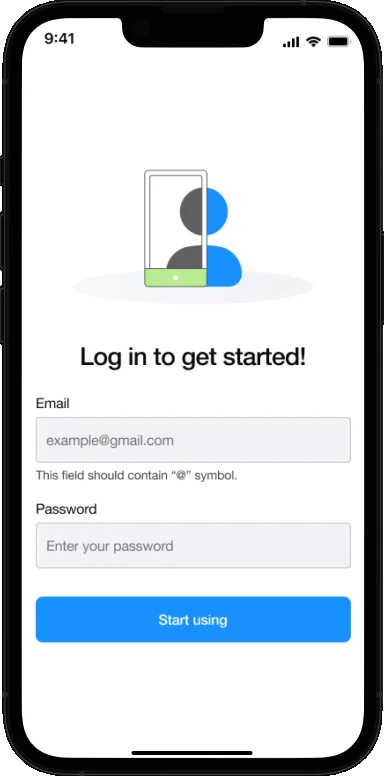
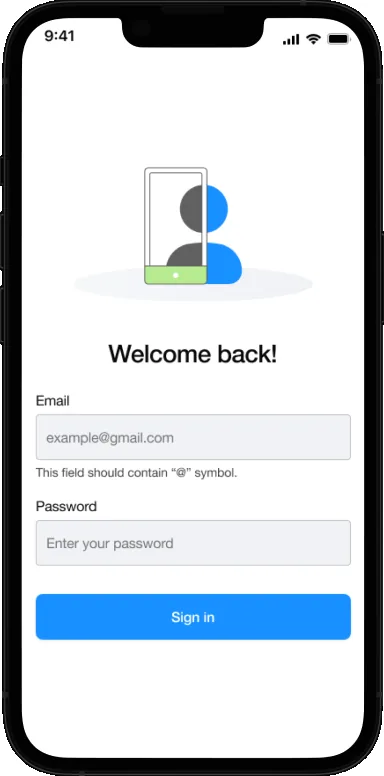
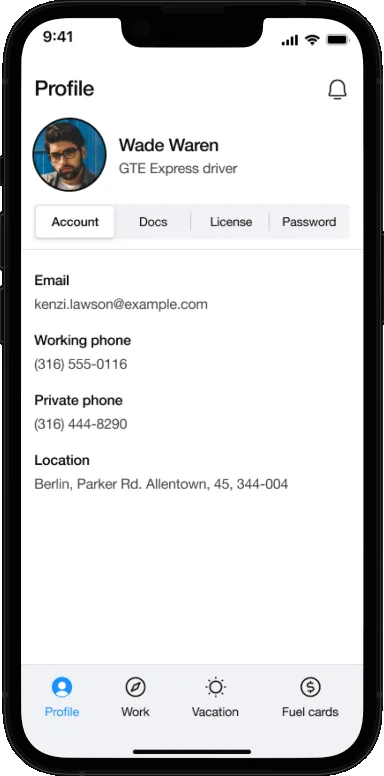
GTE needed a mobile product for the daily reality of drivers and logistics operations. The app had to handle profile data, contracts, licenses, tours, route information, media uploads, vacations, fuel cards and notifications without overwhelming the driver.
GTE
Driver logistics mobile app
Main Challenge
Drivers needed one mobile place for work assignments, documents, vacation requests, fuel-card records and operational alerts.
Timeline
The source material supports phased planning around fleet integrations, permissions, offline behavior, document security and notification rules; it does not document a fixed public delivery date.
Team
Product strategy and UX/UI are evidenced in the source; engineering, QA and launch roles depend on the confirmed driver logistics mobile application implementation scope.
Core Scope
A logistics mobile app for driver profiles, documents, tour work, vacations, fuel cards and notifications
Product Overview
Why GTE Driver App needed a clearer driver logistics mobile application and how the experience was organized around the moment users need to complete a tour, document, vacation or fuel task from a phone.
GTE needed a mobile product for the daily reality of drivers and logistics operations. The app had to handle profile data, contracts, licenses, tours, route information, media uploads, vacations, fuel cards and notifications without overwhelming the driver.
The product logic was built around operational clarity: what does the driver need to do, what does the office need to track and which tasks must be fast on a phone.
A useful comparison is How To Move, where field operations, mobile records and back-office visibility shaped a different product context.
Real Product Problems And Decisions
Five case-specific tensions behind GTE Driver App, from driver documents expire to notifications drive action.
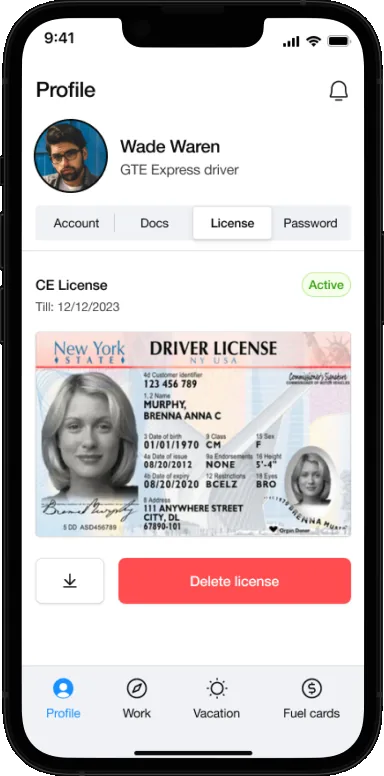
Driver Documents Expire
What It Meant
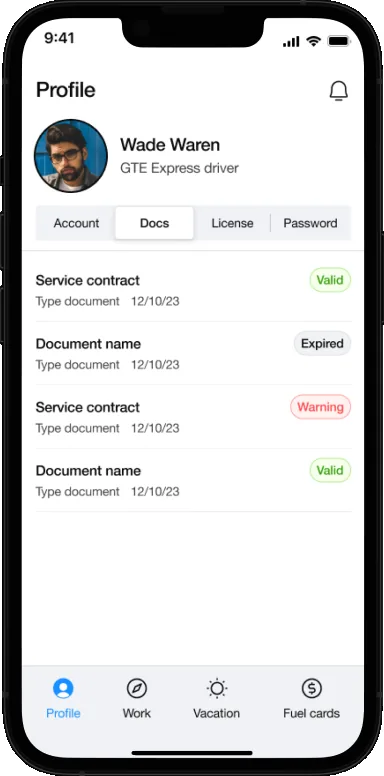
Licenses, contracts and service documents need status visibility.
How We Solved It
We used clear document states such as valid, warning and expired.
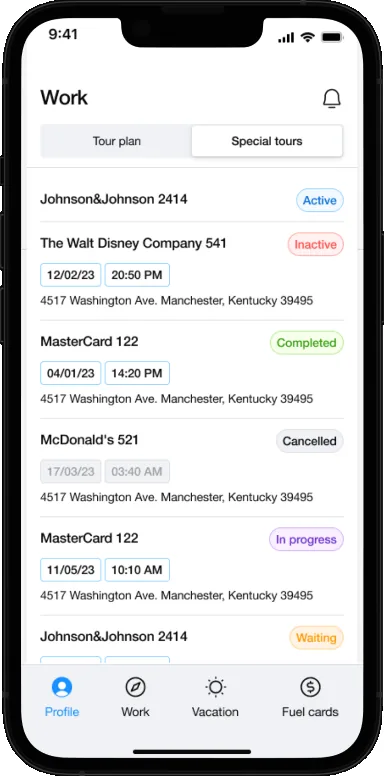
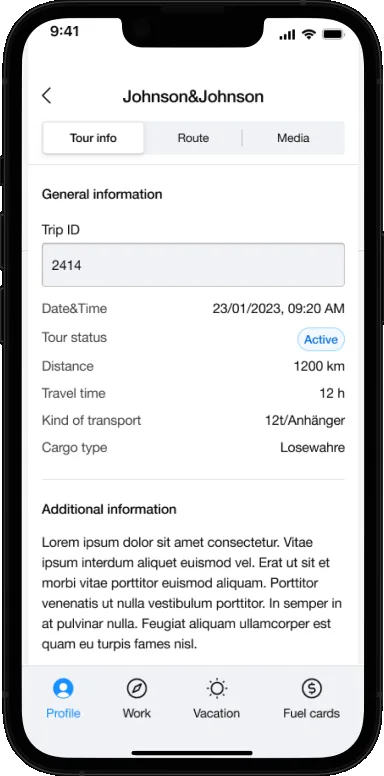
Work Assignments Need Context
What It Meant
A tour list alone is not enough for a driver to act confidently.
How We Solved It
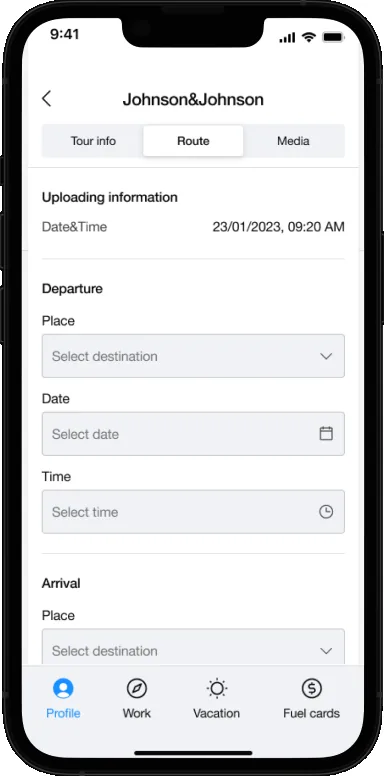
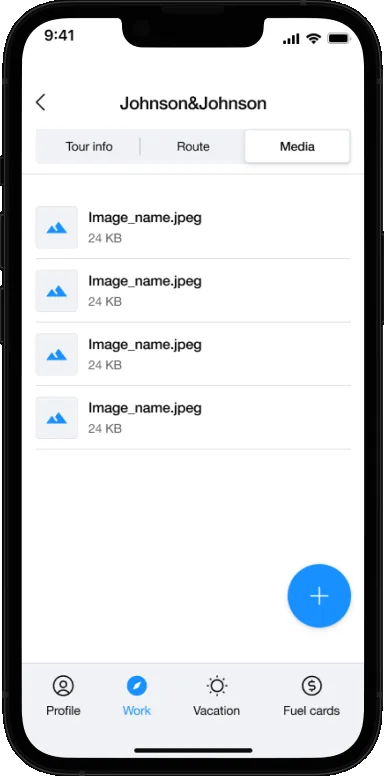
We planned trip details, route fields, media uploads and statuses.
Vacation Requests Need Control
What It Meant
Drivers need to request time off while the business tracks balances and approvals.
How We Solved It
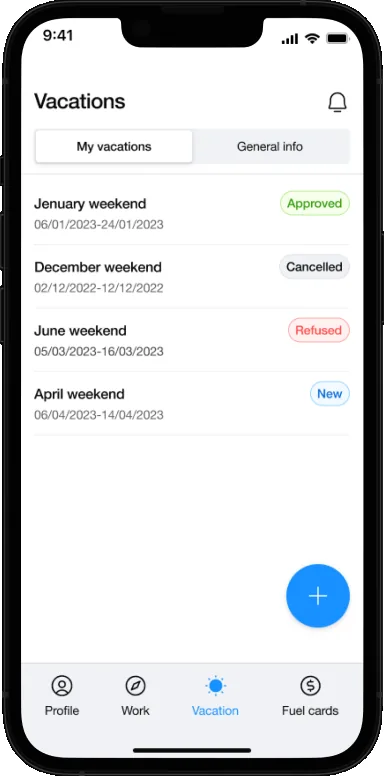
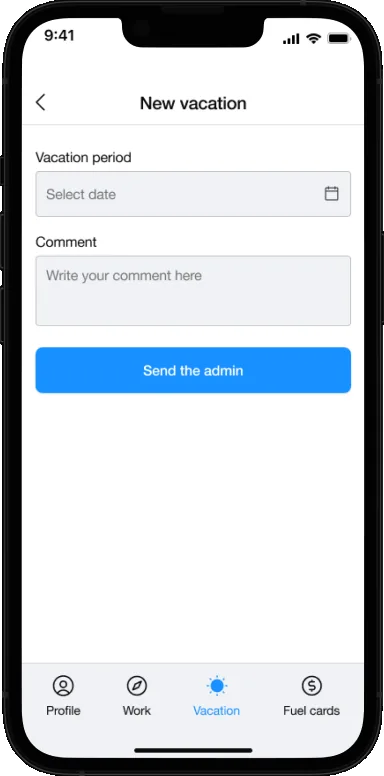
We included vacation lists, general info, new request forms and calendar states.
Fuel Records Are Operational Data
What It Meant
Fuel cards and transactions affect cost control and reporting.
How We Solved It
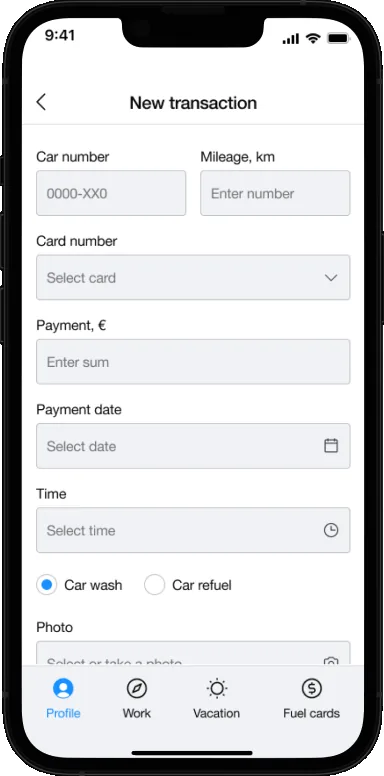
We structured fuel-card empty states, transaction lists and new transaction forms.
Notifications Drive Action
What It Meant
Drivers need to know what changed without checking every screen.
How We Solved It
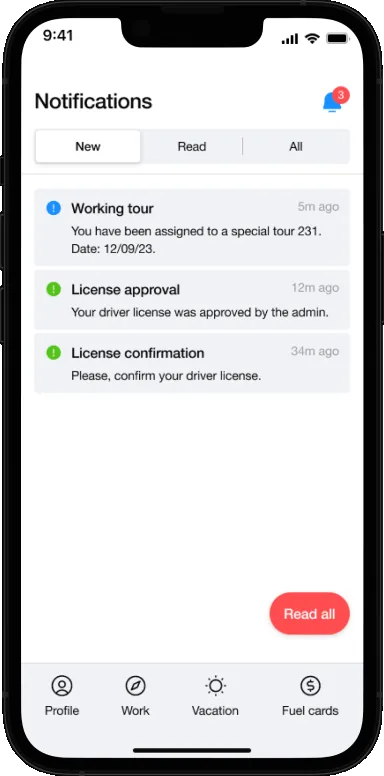
We designed new, read and all notification states with clear calls to action.
Strategy
The product strategy behind GTE Driver App and the decisions that made it easier to complete a tour, document, vacation or fuel task from a phone. The strategy was to make a logistics app that respects time, attention and operational accuracy. Drivers need speed and clarity; operations teams need data, documents and status control. We organized the app into a small number of predictable areas so documents, tours, vacations, fuel cards and alerts can be managed without turning the phone into a complicated ERP screen. This keeps the case commercially useful because the final product supports real decisions, not just a prettier interface.
What The Build Included
Five documented workstreams that define the product and experience scope of GTE Driver App.
Driver Profile And Documents
Account data, contracts, licenses, password and status logic.
Tour Management
Tour lists, trip details, route information and media upload states.
Vacation Workflow
Request creation, calendar selection, balances and approval status logic.
Fuel-Card Records
Transaction forms, card selection, payment date, mileage and transaction lists.
Notification System
New, read and all notification states for operational updates.
Key Product Screens And User Flows


Problem, Fix And Business Outcome
How five documented product problems became concrete interface decisions and practical outcomes for GTE Driver App.
Driver Documents Expire
Fix
Added expiry-aware document states and clear actions for replacing or reviewing records.
Business Outcome
Drivers and operations teams can identify document risk before it interrupts scheduled work.
Work Assignments Need Context
Fix
Combined tour details, route fields, media and task status in one assignment context.
Business Outcome
Drivers can understand and complete work without switching between messages and separate tools.
Vacation Requests Need Control
Fix
Structured vacation balances, date selection and request status as a controlled workflow.
Business Outcome
Time-off requests become easier to submit and easier for operations to review consistently.
Fuel Records Are Operational Data
Fix
Captured fuel-card selection, mileage, payment date and transaction details in dedicated forms.
Business Outcome
Fuel activity becomes structured operational data rather than an informal expense message.
Notifications Drive Action
Fix
Separated new, read and all notification views with task-oriented actions.
Business Outcome
Operational changes can reach drivers without forcing them to search every part of the app.
Business Impact
The operational and commercial value GTE Driver App was designed to support through clearer complete a tour, document, vacation or fuel task from a phone.
01
Cleaner Driver Operations
Drivers can access documents, tours, vacation and fuel tasks from one mobile product.
02
Fewer Status Blind Spots
Document and notification states make operational changes easier to notice.
03
Better Field Data Capture
Route, media and transaction forms help the business collect practical information.
04
Lower Admin Friction
Repeated requests and records can move through structured flows instead of manual messages.
05
More Scalable Logistics Control
The same app logic can support larger fleets, more roles and deeper reporting later.
Connected Services
Five JP Urban Digital service layers directly relevant to the documented scope of GTE Driver App.
01
Keeps documents, tours, media uploads, vacation requests, fuel records and notifications usable on phones with clear states and repeat actions.
02
Extends fleet assignments, approvals, document status and field reporting into permissioned admin views, approvals and reporting.
03
Supports driver profiles, documents, tours, vacations, fuel transactions and notifications without forcing GTE Driver App into a generic off-the-shelf workflow.
04
Measures task completion, document status, request turnaround and operational exceptions so the team can see where the experience needs improvement.
05
Supports approval routing and exception notifications where data quality, human review and operational safeguards remain explicit.
Budget And Scope Planning
Planning ranges for a comparable driver logistics mobile application; final scope depends on fleet integrations, permissions, offline behavior, document security and notification rules.
Fleet Workflow Discovery And Mobile UX
$9,000-$28,000
Driver Application MVP
$35,000-$110,000+
Fleet Admin And Integration Layer
$18,000-$70,000+
Operational Reporting And QA
$6,000-$22,000+
for exception tracking, device testing and fleet reporting; use analytics and BI pricing to compare the nearest delivery model.
Scope Note
Offline access, telematics, document security, multilingual delivery and fleet-system integrations are major cost drivers.
Where This Approach Also Applies
Three markets where the same field operations, mobile records and back-office visibility can solve a similar user or operational problem.
Moving And Logistics
Fleet and moving operations share document, route, status and field-handoff requirements.
Automotive
Driver-facing products also support vehicle, fuel and service records across distributed teams.
B2B And Professional Services
Operational service companies need clear mobile actions connected to back-office ownership.
Tools And Stack
The design and delivery methods used to structure GTE Driver App, with implementation choices kept proportionate to the documented scope.
01
Product Planning
Mapped driver and operations responsibilities across documents, tours, leave and fuel activity.
02
UX And Interface Design
Designed mobile states for field use, including warnings, forms, lists and confirmations.
03
Experience Logic
Connected assignments, route media, vacation requests and notifications into predictable task flows.
04
Operational Model
Defined the records and status changes required for back-office visibility.
05
Quality Review
Reviewed device behavior, permission-sensitive actions, empty states and field-entry risks.
Need A Driver App That Connects Daily Work With Operations?
Plan Your Driver Operations App
01
We review driver tasks, route information, documents, notifications and back-office needs.
02
We identify where mobile workflows create delays, duplicate entry or missing context.
03
We map driver-facing actions together with the operational and administrative layer.
04
You receive a phased plan for a logistics app that supports work in the field and control in the office.